
Cycling Visibilities
How do new arrivals navigate, mentally map and come to know the city? How does the process of coming to know and inhabit a new city or your own fragment of it intersect with race, class, legal status and gender? We explored this question in collaboration with The Bike Project and artist Natasha Davis.
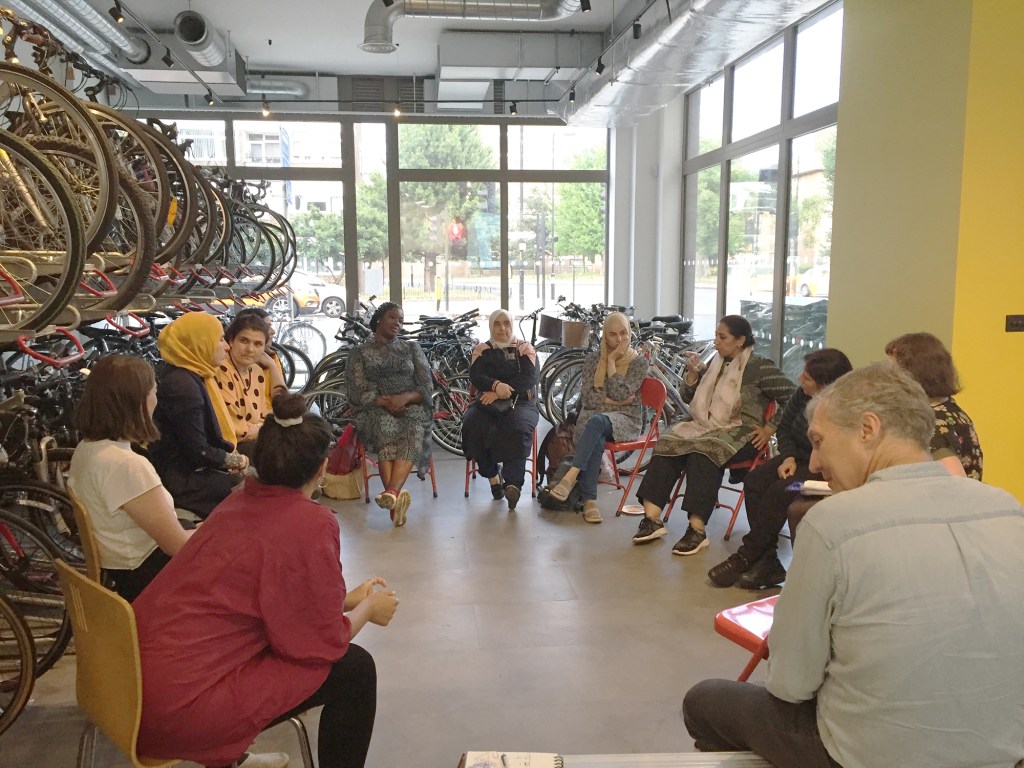
The Bike Project take in secondhand bikes, refurbish them and donate them to refugees and people seeking asylum. A one day bus pass in London costs £4.95. A one day travelcard can cost up to £14.10. Support payments for people seeking asylum in Britain are £5.84 a day and for those who are accommodated in hotels or “Initial Accommodation Centres”, there is no financial support at all. With no right to work, public transport is either prohibitively expensive or near impossible to access which has a profound impact on how people in the asylum system relate to the city.
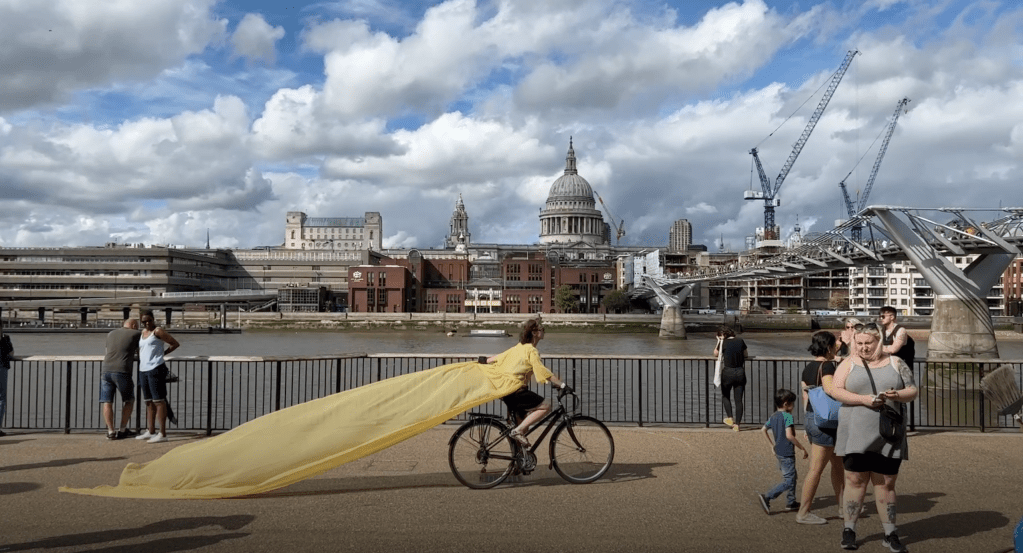
We asked what difference a bike makes in navigating and dwelling in the city. Is it a symbolic object, a means of opening the city, or a way of asserting one’s presence on city streets? Working with Natasha Davis and 9 women involved in The Bike Project’s Pedal Power women’s cycle training programme, we co-produced a film inspired by the participants’ artistic passions and how they relate to their bicycles.
The dress that makes the invisible cyclist visible
Short version of the film: 5 minutes
The dress that makes the invisible cyclist visible
Full film: 23 minutes
“I sweat, I feel good in myself”
”My bike is my friend, it’s like my support animal”
“Pedal Power is my life now”
Who cycles and who is seen as the right kind of, or ‘good’ cyclist? As we begin to write up our findings from this part of the project, we will explore some of these themes. We will also be presenting on our work with Natasha Davis and The Bike Project at the British Sociological Association conference in 2023.
 Open City Project